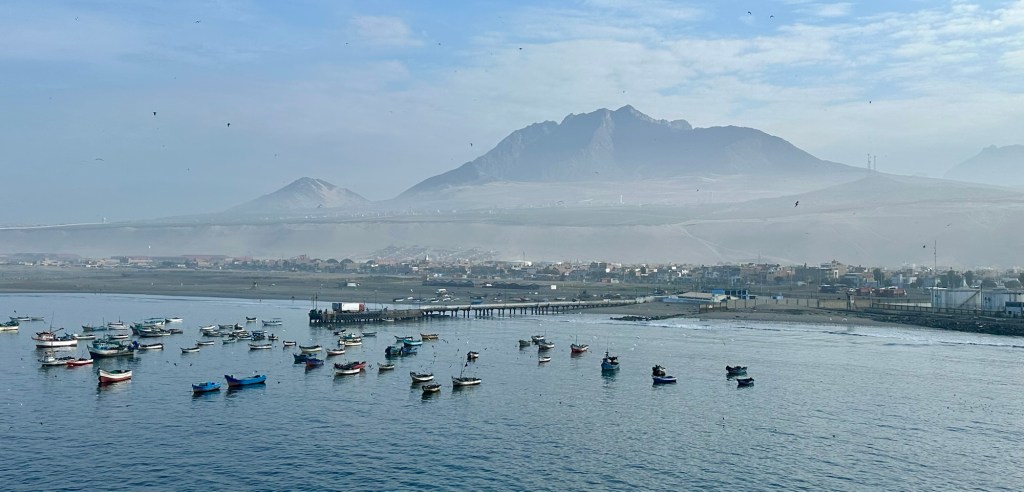
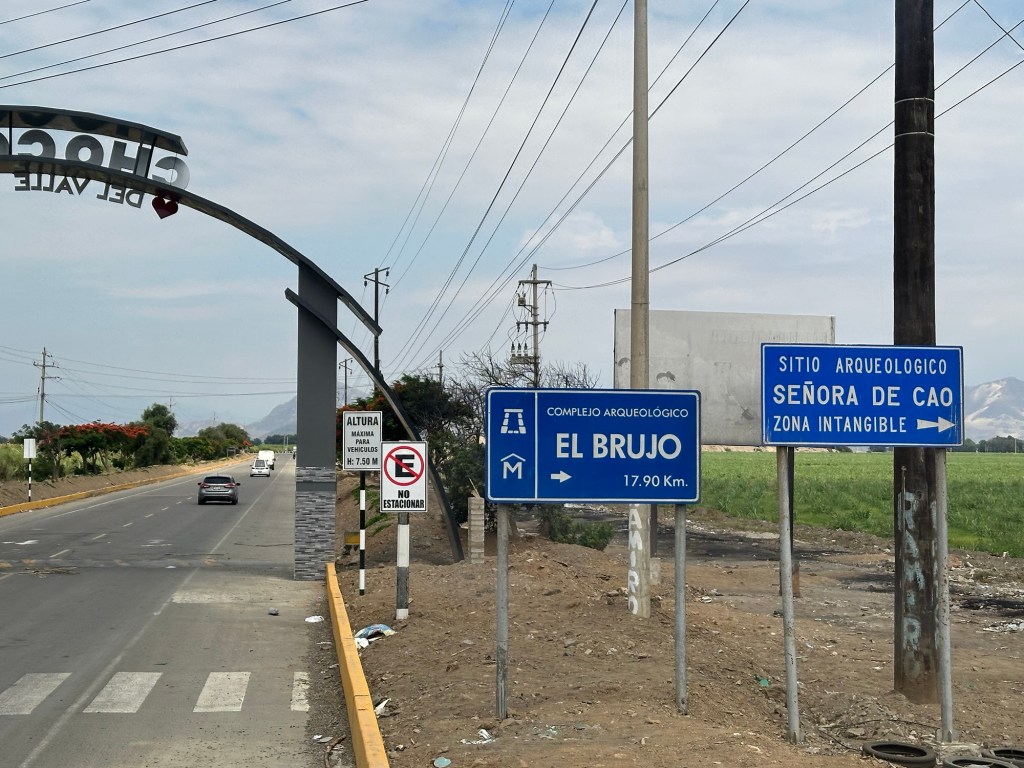
Salavery is a small port southwest of Trujillo in northern Peru. The town is a gateway to Trujillo and the pre-Columbian sites such as Chan Chan and the Huacas del Soy y de la Luna. We had an excursion with the ship to the ruins of El Brujo, an excavation site of Peru’s Moche people.
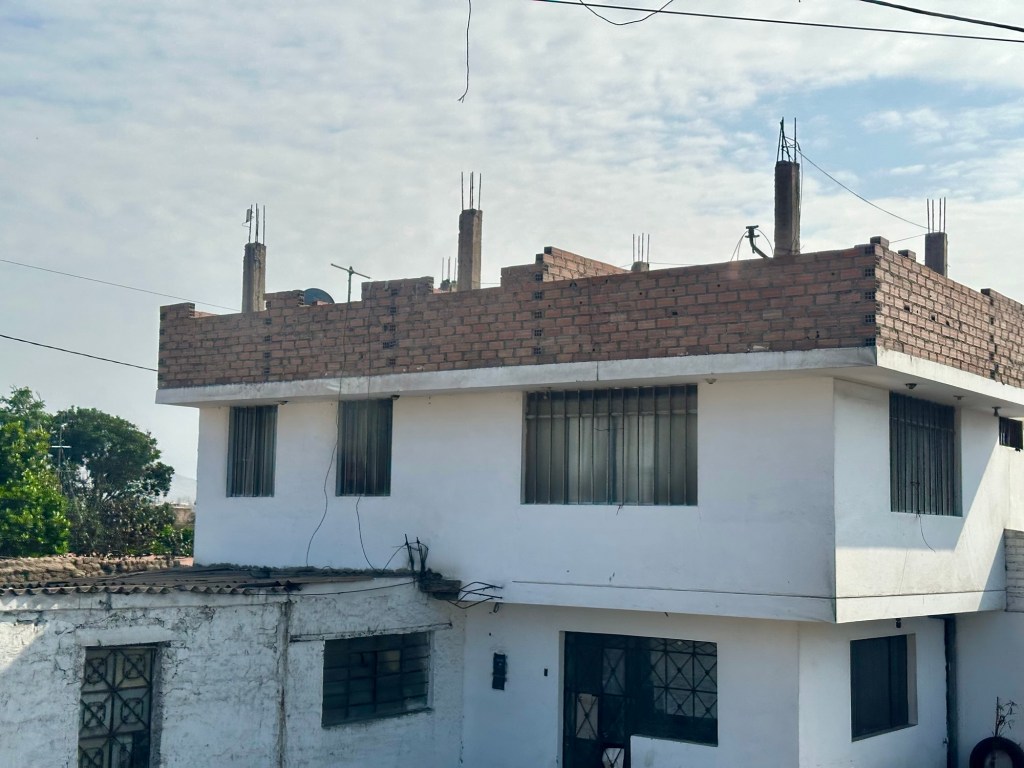
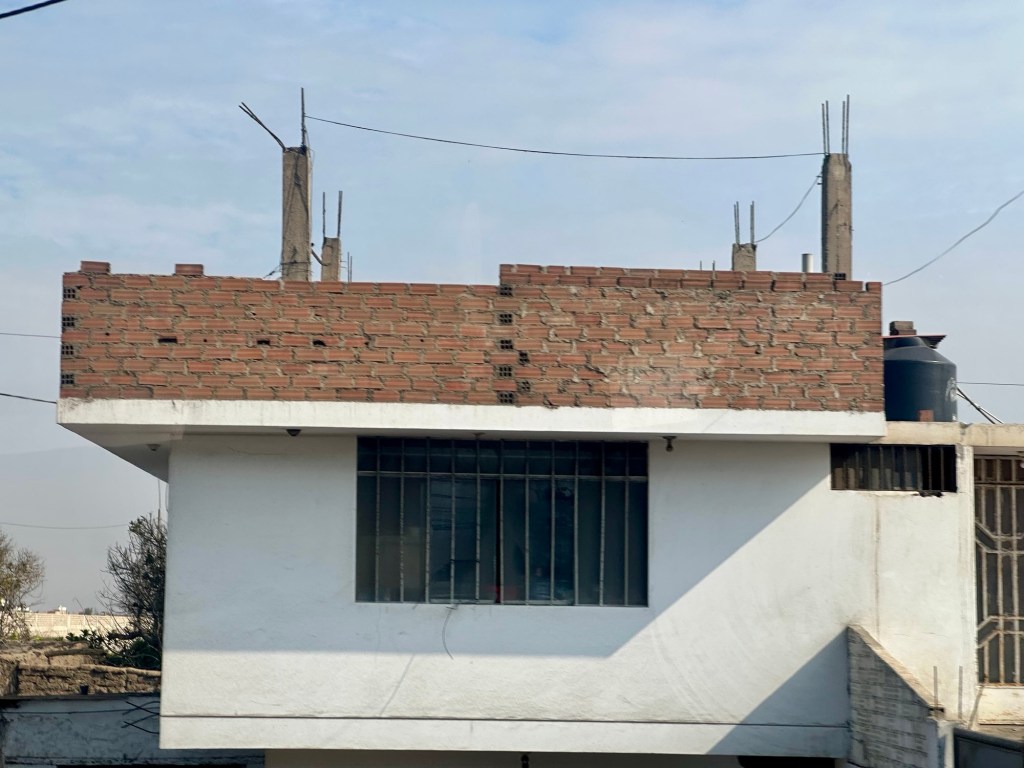
We boarded a bus of approximately 38 people. On the way we saw many houses that look unfinished. Our guide said if the house is unfinished, they don’t have to pay taxes. Later in Lima, a different guide said the taxes may be less if the house is unfinished.
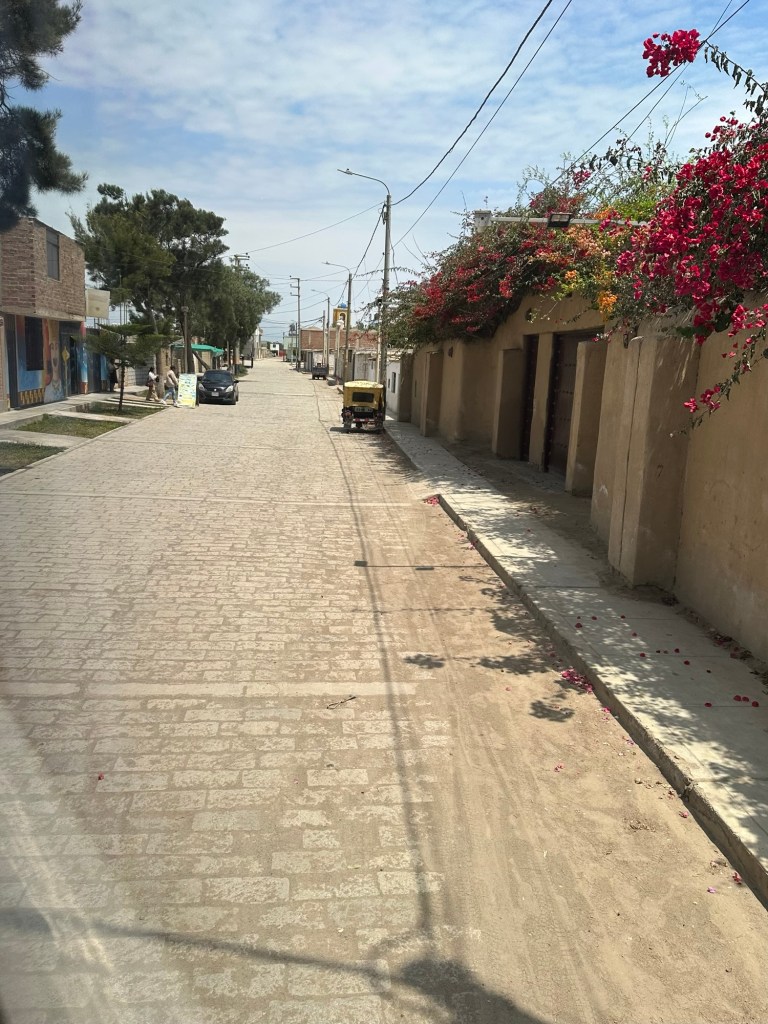
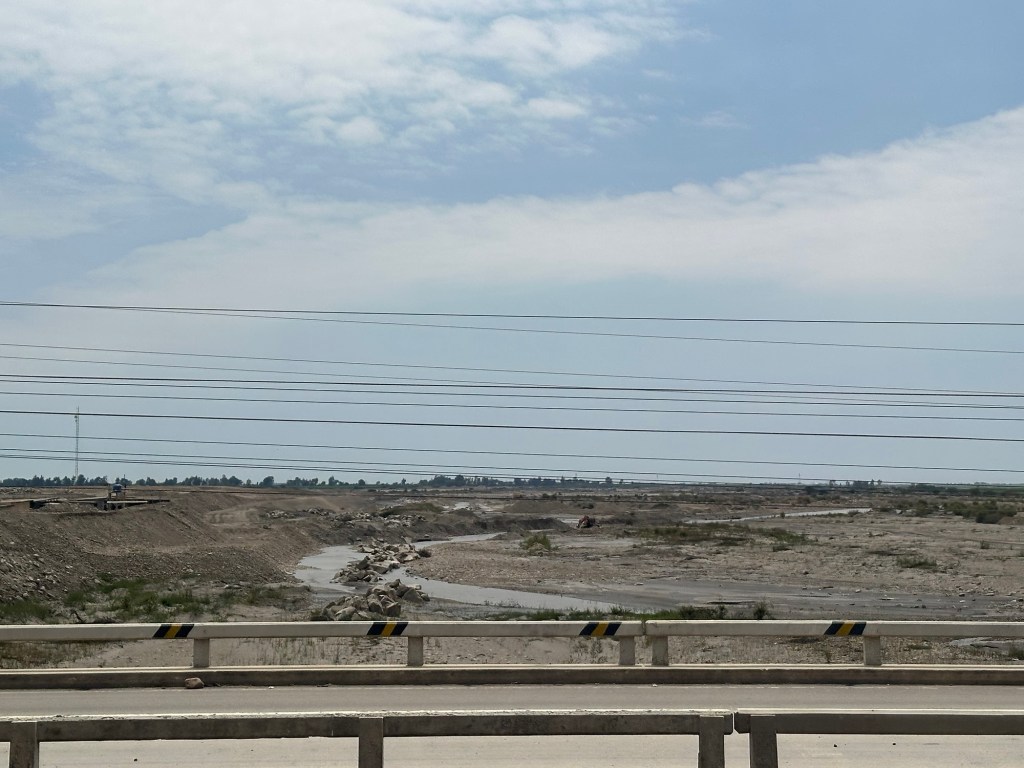
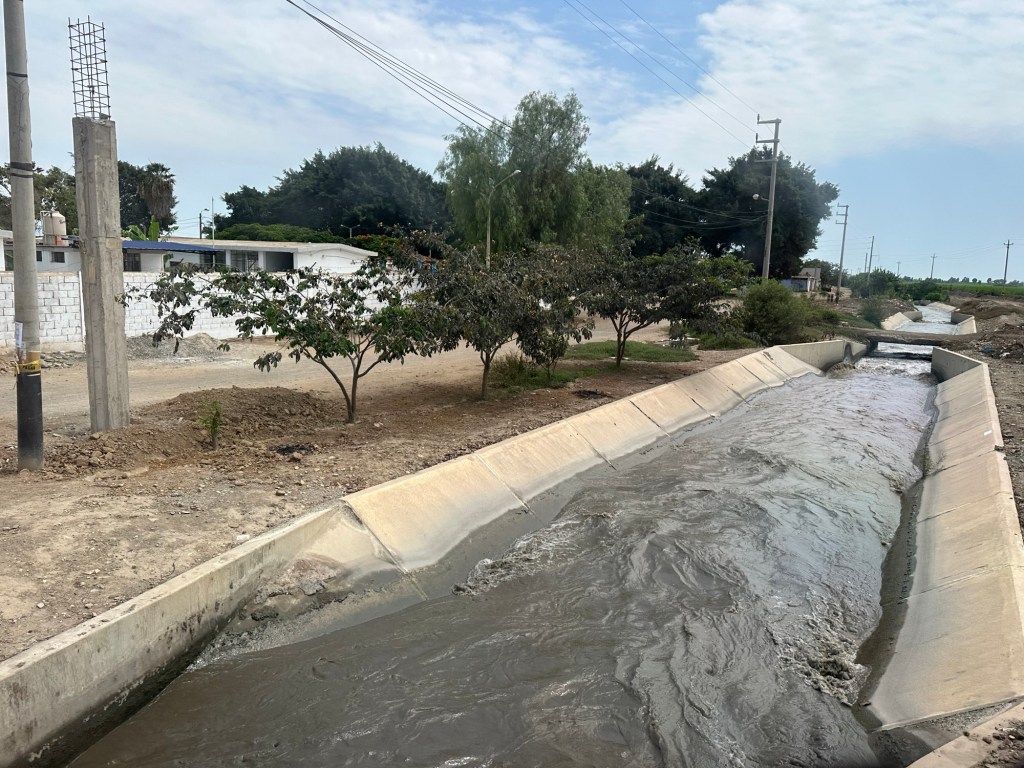
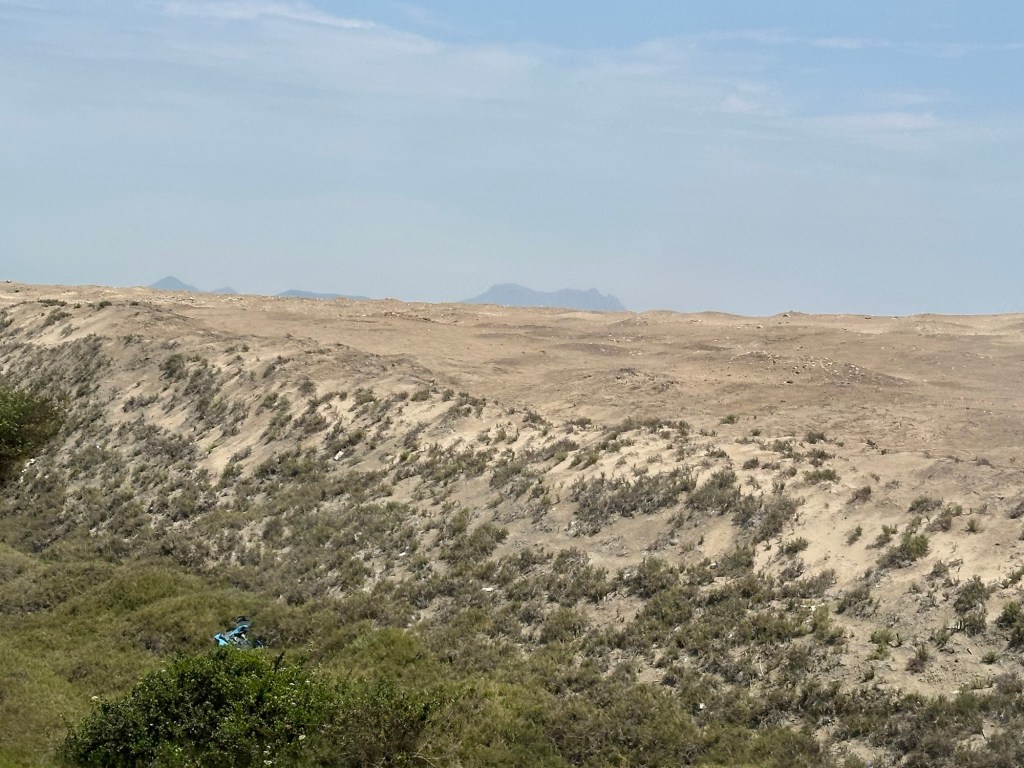
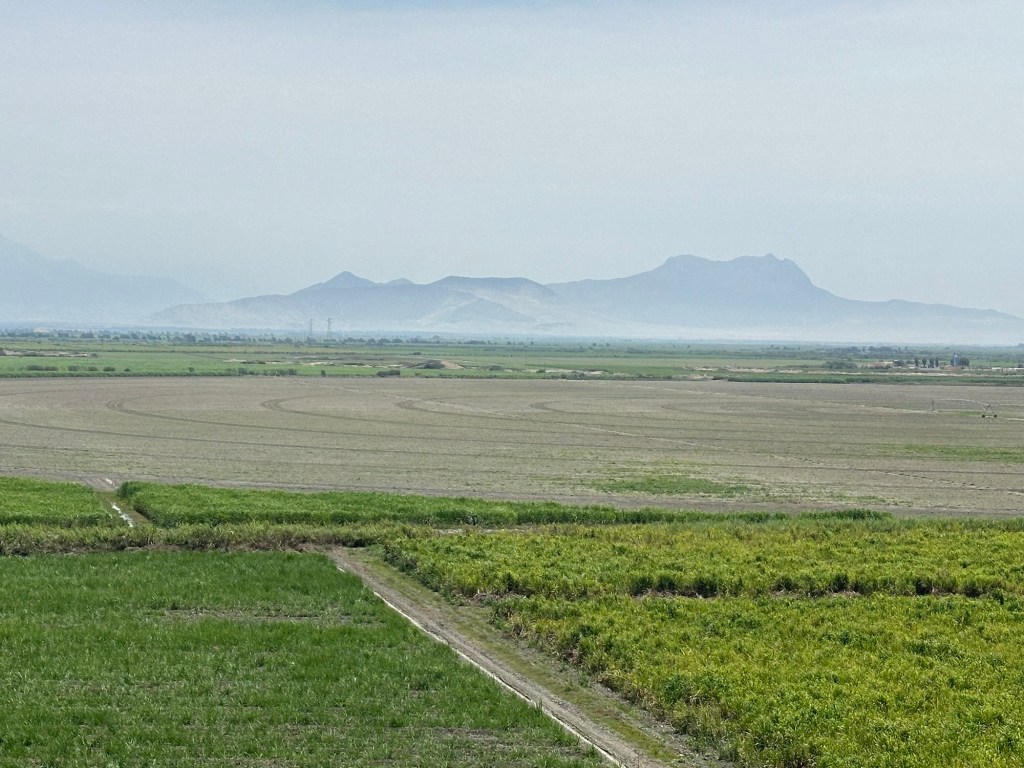
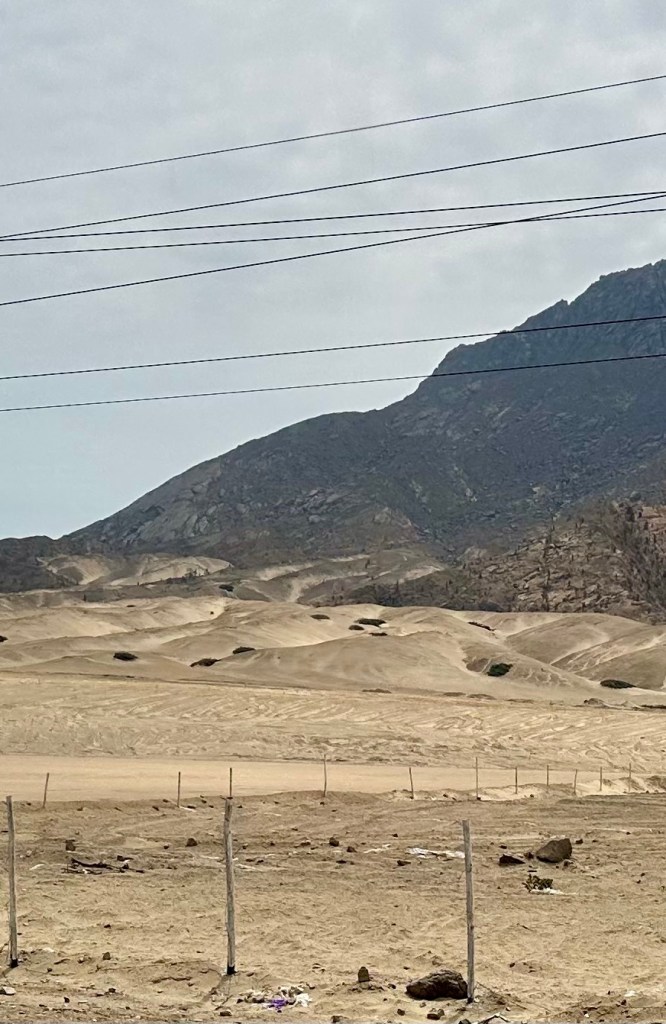
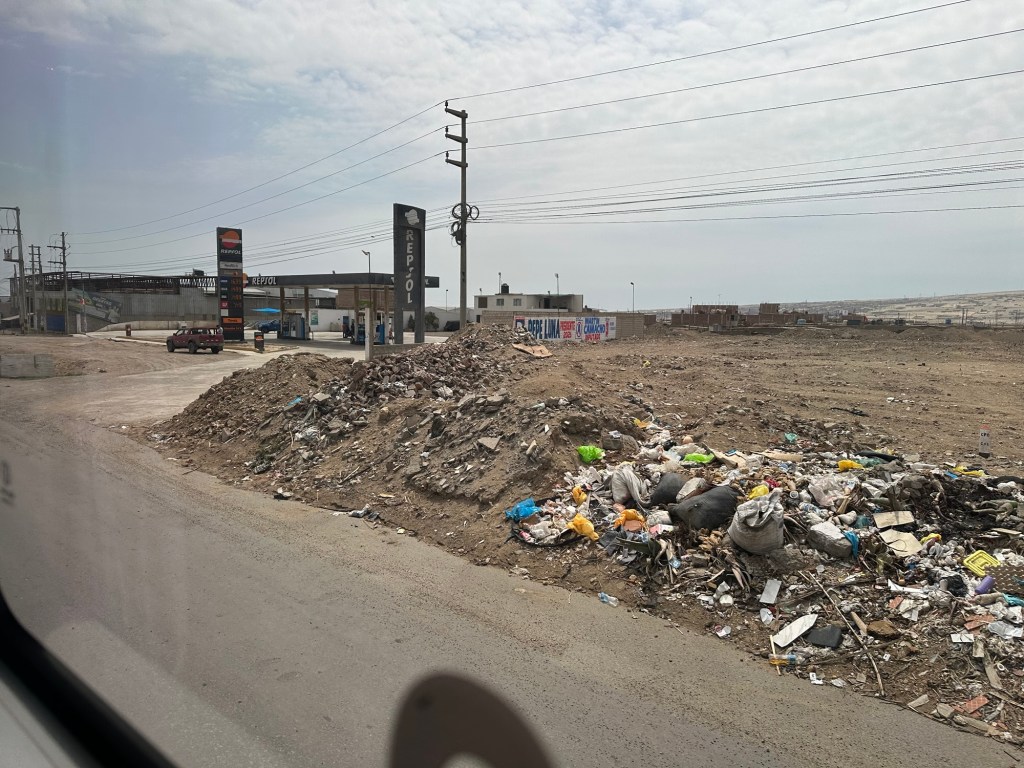
It looks like the upstairs level is under construction. Typical side street We are on a bridge looking at the river bed. The little stream on the left is the beginning of the river starting to come down from the mountain. The area is a desert so all water is irrigated from the river coming from the mountain. See the difference between the desert and the green that has irrigation for the crops. Another picture of the agricultural irrigation. The natural land looks like the moon to me with dry mounds. When you ask guides about the trash, they seem oblivious to it. Only wealthy areas have trash service. There are signs that say dumping is prohibited, but it doesn’t stop it. The people we talked to that went into town saw traditional South American markets. We’ve done that. So we went to the archaeological site of the Moche culture.
We were divided into smaller groups of about 16-18 with our guide to walk the site.
Brujo is distinguished for being the only archaeological site on the Peruvian North Coast that contains material evidence of human occupations corresponding to all the periods of Peruvian history.
Depending on whether you believe in a young earth or old earth, they state the archaeological finds date back 14,000 years ago. The museum has earth gathering artifacts and gourds, progressing to more advanced ceramics. The Moche Culture flourished 200-800 AD.
Disclaimer: most of the information and descriptions come from the signage at the sites. Although our guide was knowledgeable, we found her talk repetitive and boring to be honest. She kept trying to slow the group down and skip areas at the top so one man could catch up. All the signs were in Spanish and English so the site could easily be done without a guide if you had reliable transportation.
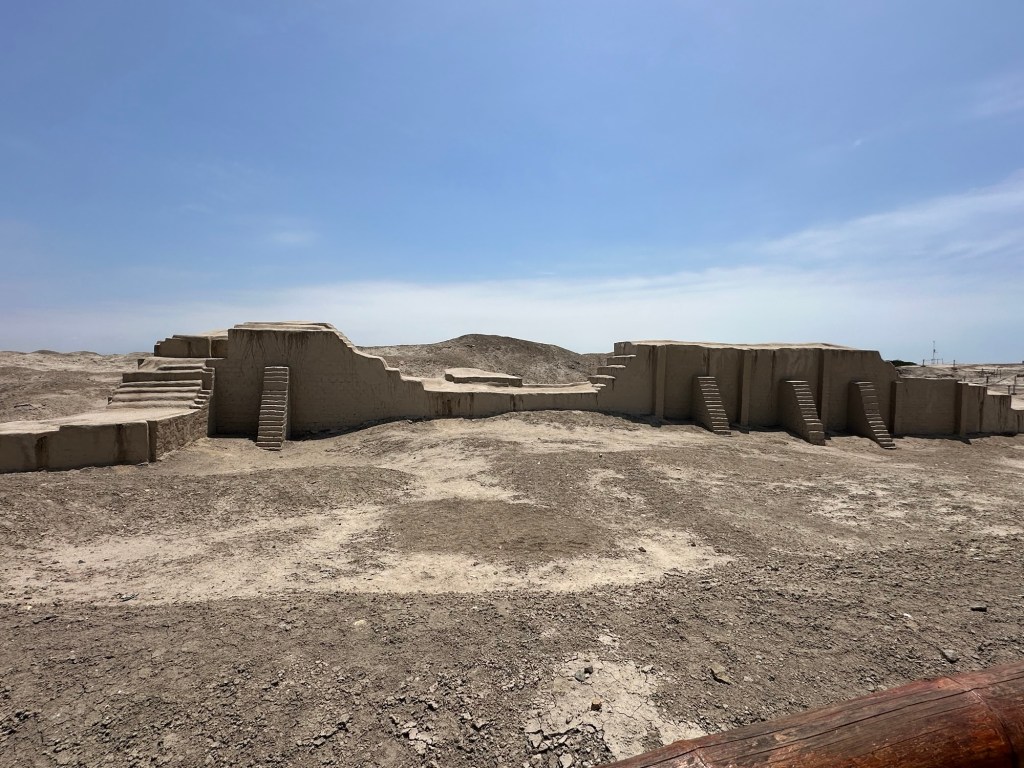
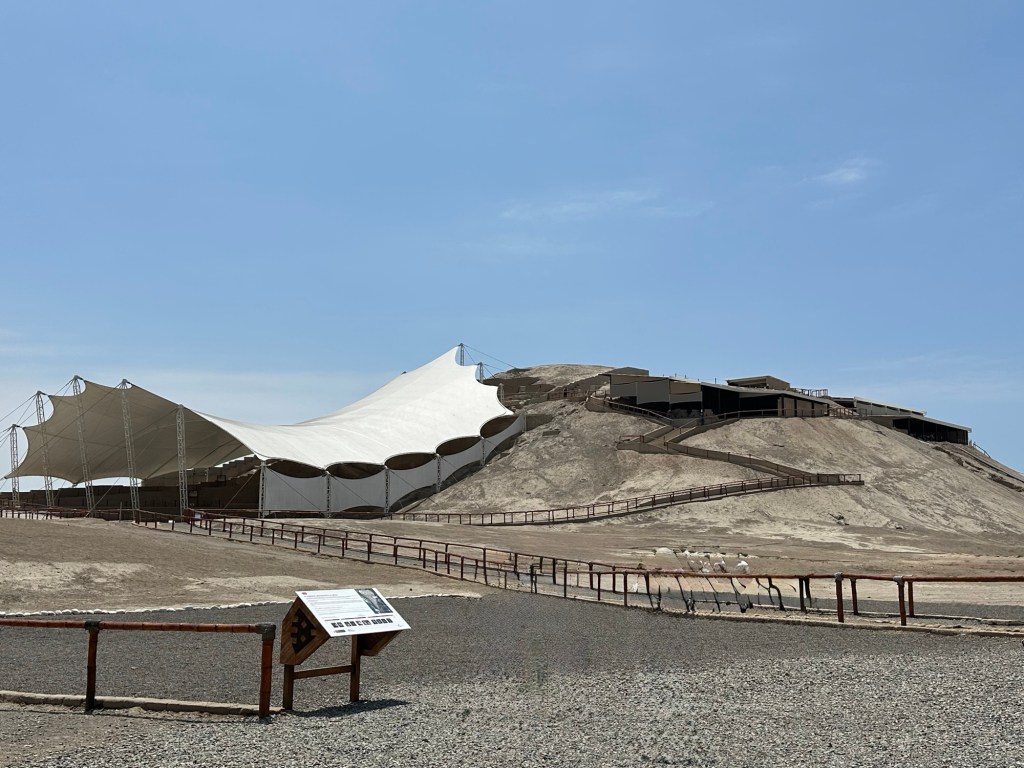
Brujo Archaeological Complex: ruins of the reservation of Santa María Magdalena de Cao. The town was organized following Spanish tradition: a central plaza, where a convent was located, streets with residences, institutional buildings.The walk to the top of Huaca Cao Viejo was like going up 4 flights of stairs to me. The excursion was listed as strenuous, and one man in our group really struggled with his breathing.
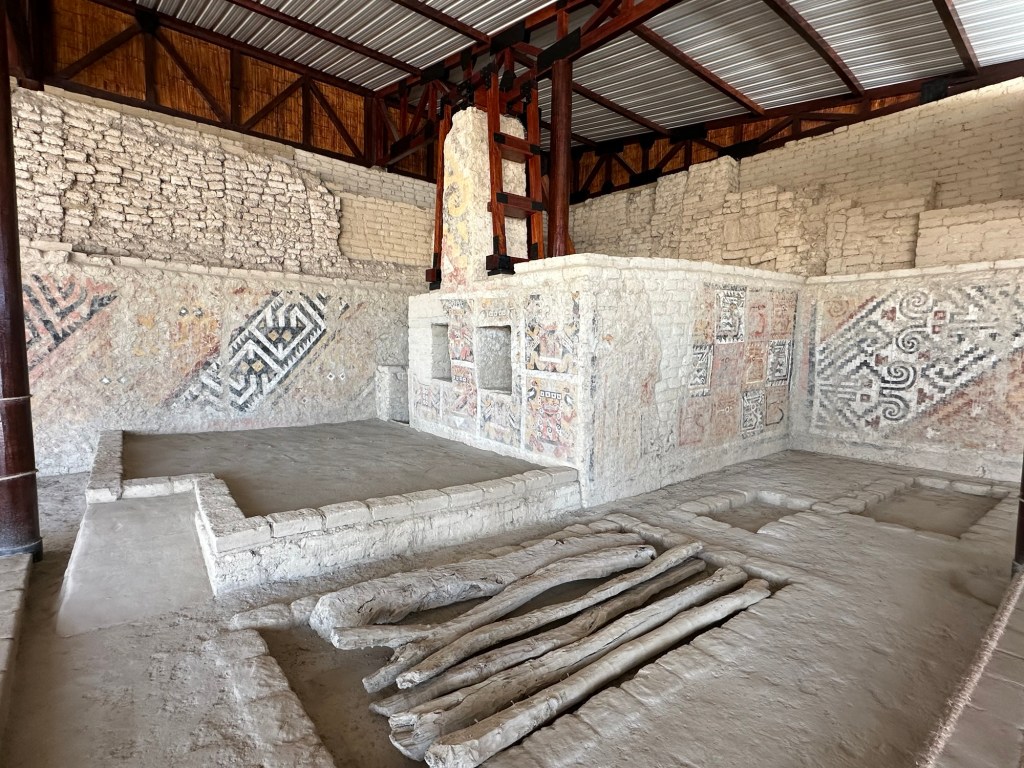
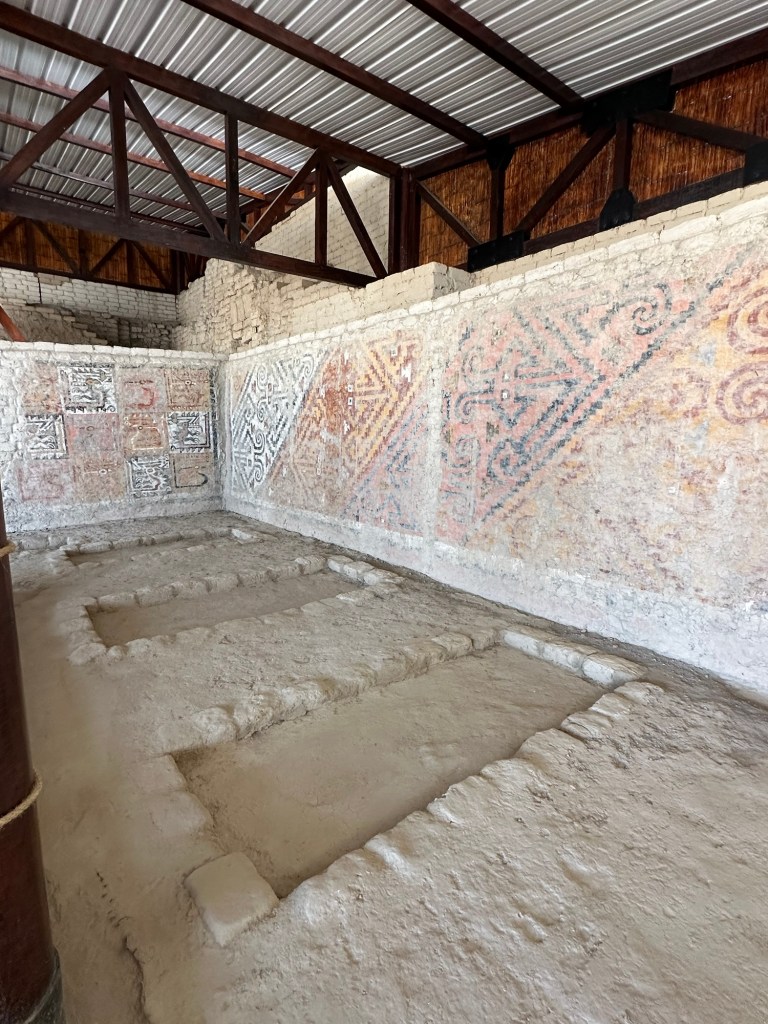
Huaca Cao Viejo (the largest at this site) is famous for its polychromereliefs (multicolored sculptures built within a wall), mural paintings, and the discovery of the Señora de Cao. Her mummified remains are currently the earliest evidence for a female ruler in Peru.
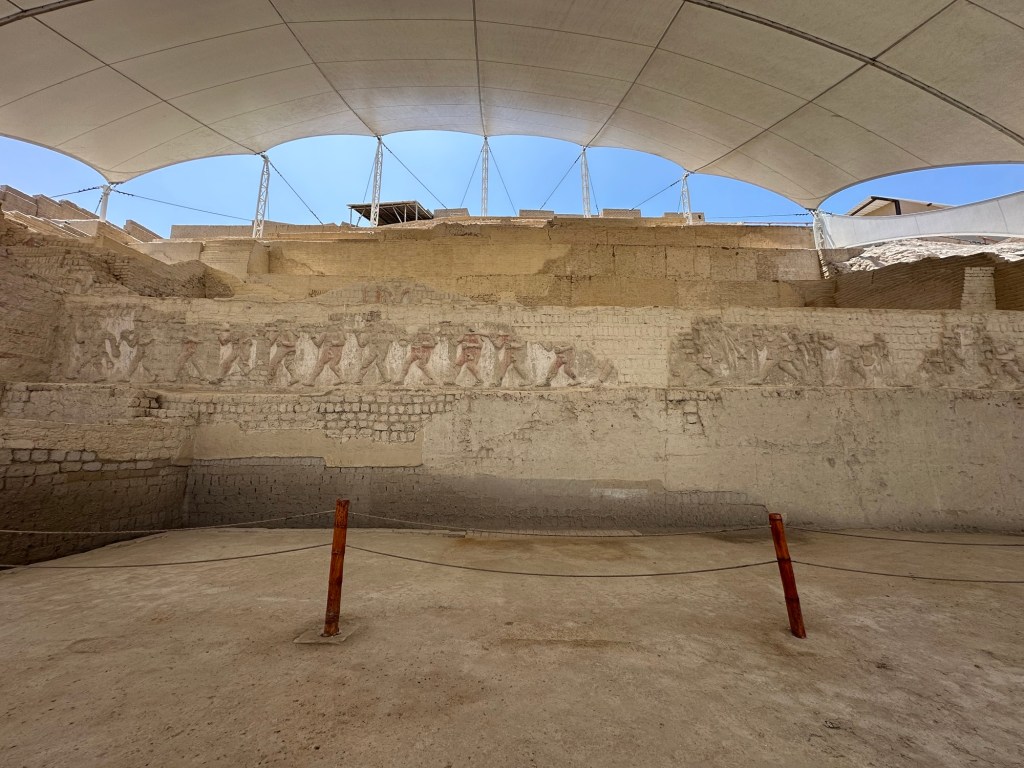
The ceremonial plaza: The murals show procession of warriors and naked prisoners, interpersonal combat, officiants tied by their hands, and in the picture below is “The Decapitator” (principal Moche deity).Burial site where Lady Cao was found: In 2004, a set of five tombs was uncovered, of which the largest and deepest stood out, containing the mummy bundle of Lady Cao.
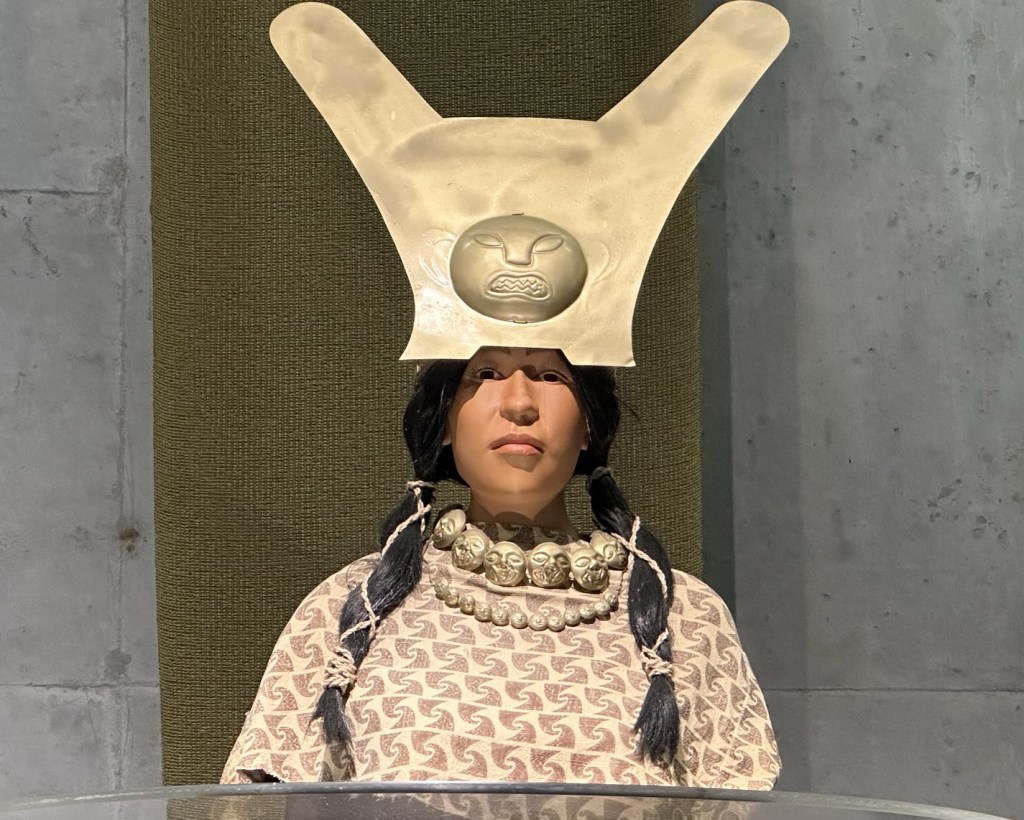
The mummy bundle had lots of linens, crowns, decorated dresses, raw materials for textile production, (I guess they wanted her to be able to make new dresses in her afterlife), jewelry and small offerings. The bundle indicated she was highly powerful in their culture.
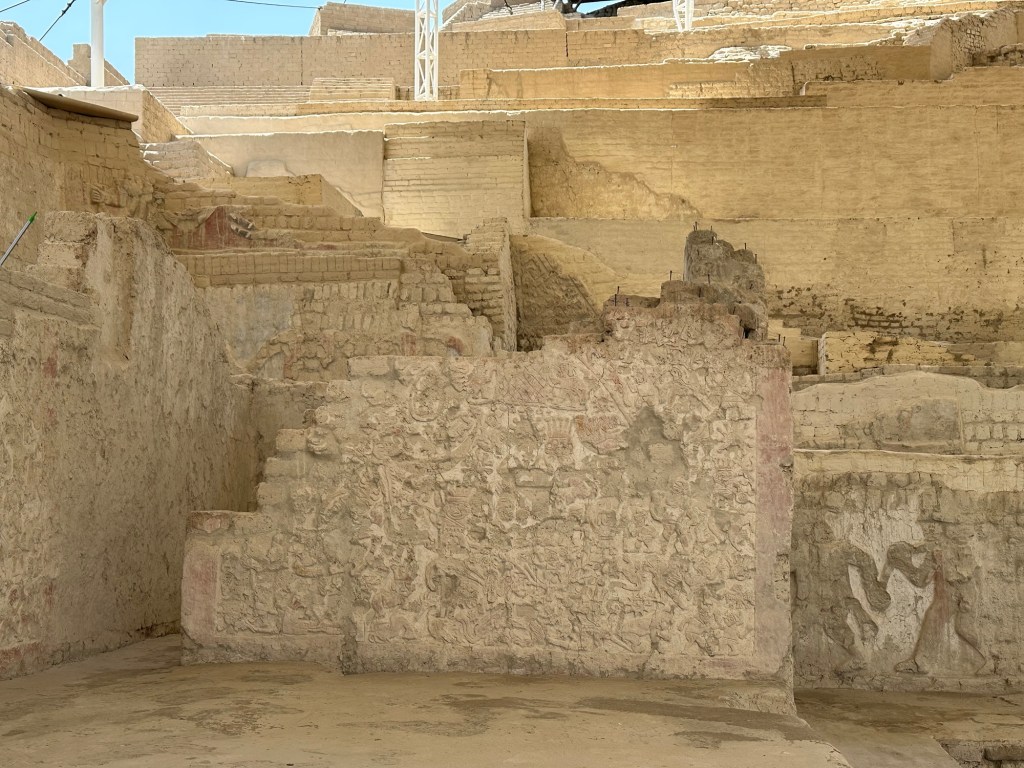
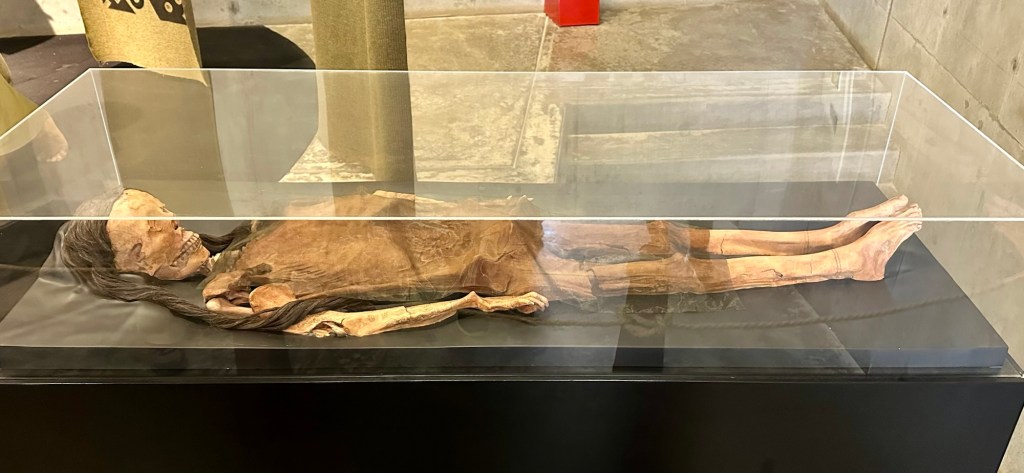
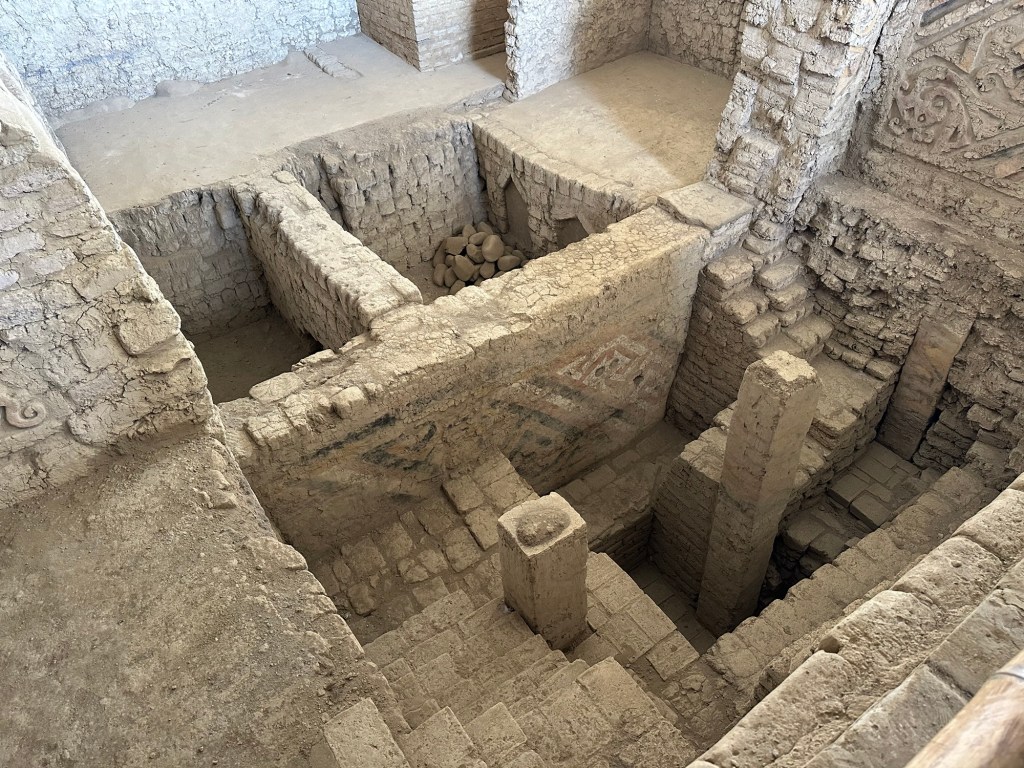
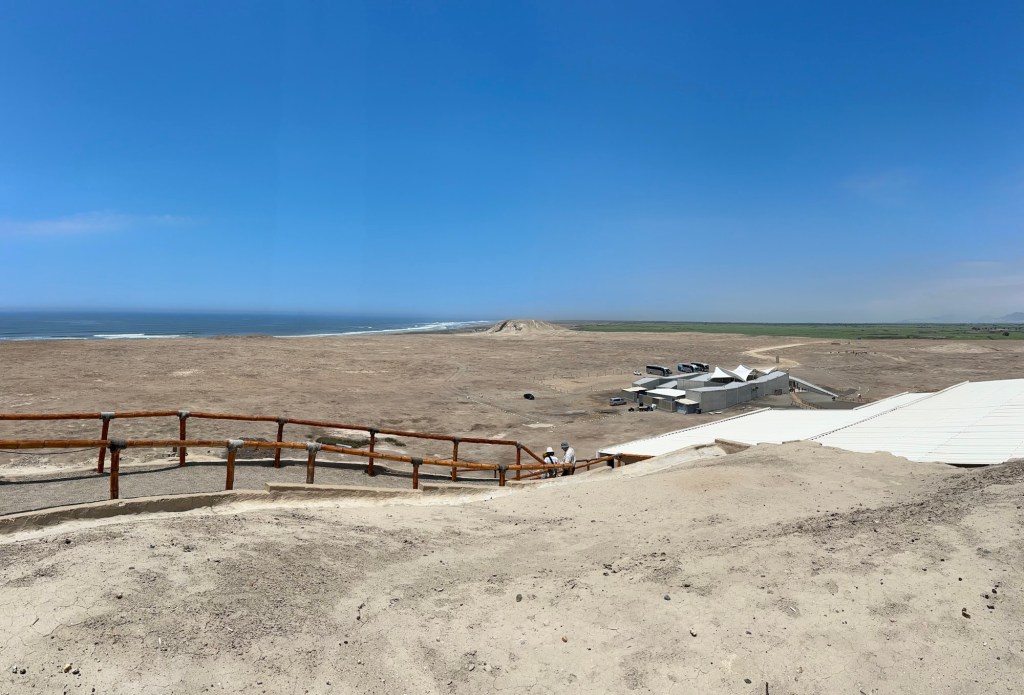
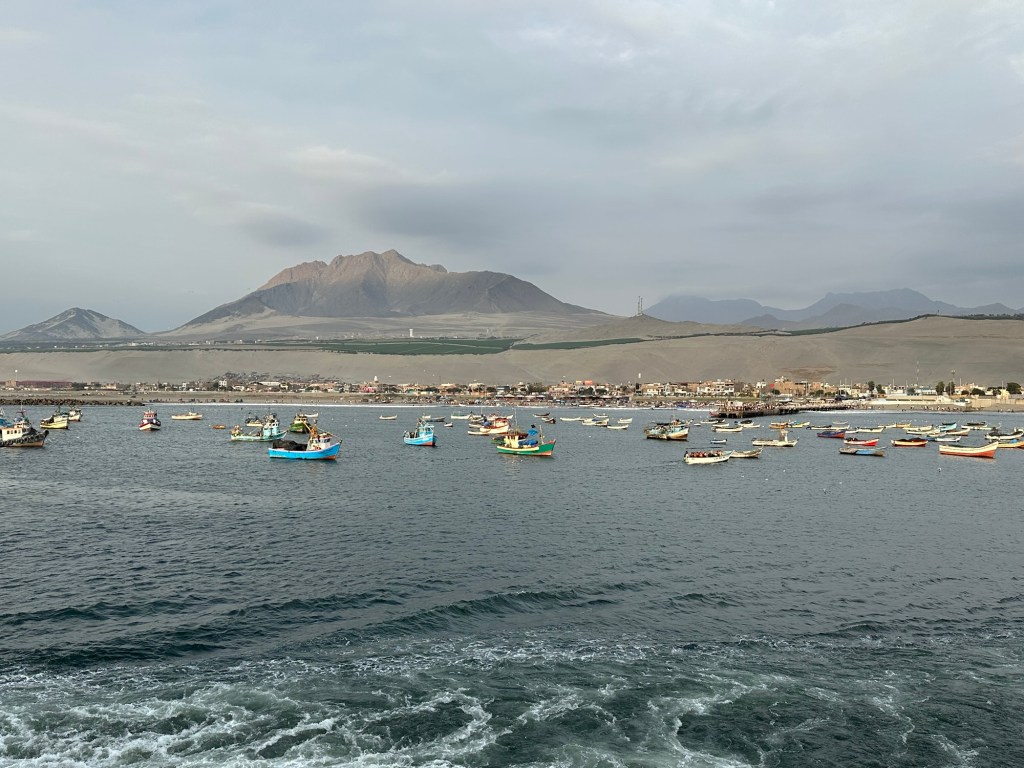
Other burial sites found near the Lady of Cao were less deep. One contained a mummy bundle who could have been her father, possibly a priest because of the things buried with him. The on site museum displays this replica of the mummified Lady Cao. The real body is in another room where no pictures are allowed.This is a projection of what they believe Lady Cao would have looked like. It is believed she must have been about 25 years old, a ruler and a warrior.This excavation shows the people built temples upon older temples. Notice the deeper walls are also painted. This is the view from the top of the largest mound. When we got back on the boat, the clouds had lifted so the view was much clearer.

 Journey With Jeannie
Leave a reply to Denise Voto Cancel reply